

Tashkent Hosts “Tashkent Water Week 2026” International Forum
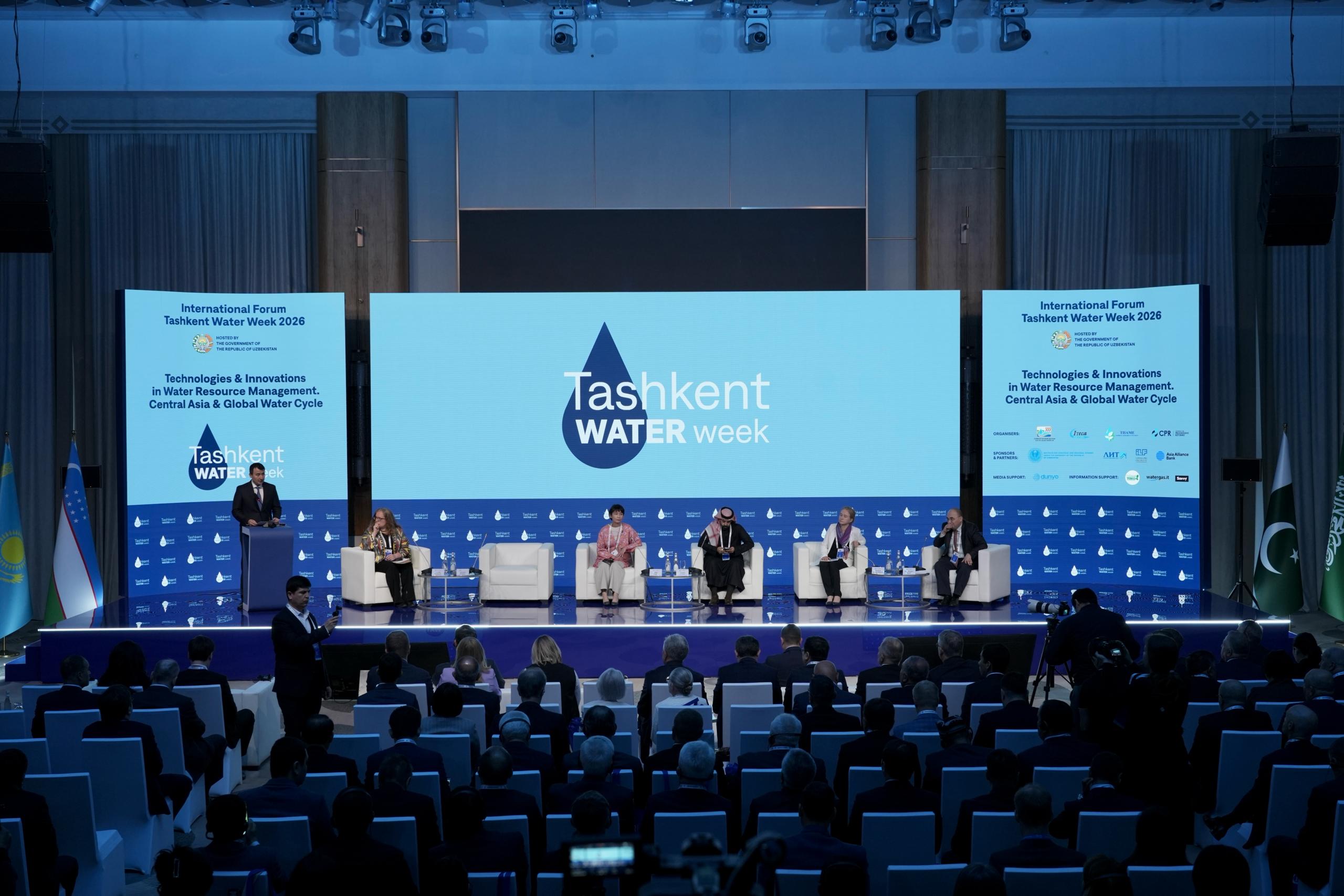
On 25–26 March 2026, the “Tashkent Water Week 2026” International Forum is held in Tashkent, the capital of Uzbekistan. The Forum is convened at the initiative of the Government of Uzbekistan with the support of the Ministry of Water Resources, Iteca Exhibitions International Exhibition Company, the Center for Progressive Reforms, and the Tashkent Institute of Irrigation and Agricultural Mechanisation Engineers National Research University.
The key theme of the Forum is “Technologies and Innovations in Water Resource Management: Central Asia and the Global Water Cycle”, which focuses on the challenges of climate change and water scarcity in Central Asia, as well as the efficient management of water resources to meet the needs of households, industry, and economic development.
The Central Asian region faces growing water scarcity due to climate change and increasing water demand. Rising demand from populations, industries, and development projects places additional pressure on water infrastructure and highlights the need for more efficient and sustainable water management practices.
In this context, effective and sustainable water resource management becomes a strategic priority and directly impacts regional cooperation and Central Asia’s role in the global water cycle. Addressing these issues requires comprehensive measures. Agriculture in the region remains heavily dependent on irrigation, which makes the adoption of modern water-use practices essential. Ensuring access to high-quality drinking water is equally crucial.
Water in Central Asia is not just a resource but a strategic factor that defines the economic stability of the region. Countries actively seek effective models for joint water management.
The Government of Uzbekistan hosts the Forum for the first time in this format. The Forum provides a unique platform to exchange experiences, discuss innovative approaches, and develop joint strategies for water resource management. Participants examine technological and digital innovations in water supply, global trends and challenges in water management, the role of water in food security, cross-sectoral collaboration, the implementation of green standards, sustainable land use, human capital development, and the training of qualified professionals for the water sector.
The Forum Programme features 16 sessions and brings together around 80 speakers and over 1,200 delegates from 19 countries, including Austria, UAE, the United Kingdom, Finland, France, Germany, Italy, the Netherlands, Kazakhstan, Russia, Saudi Arabia, Switzerland, Sweden, Slovakia, Tajikistan, Hungary, China, and Uzbekistan.
The Programme unites stakeholders across all levels of the professional community from government representatives and international organizations to business leaders, researchers, and young specialists. It fosters synergy between science, practice, and business and creates conditions for the practical implementation of research and innovations.
Mirshohid Aslanov emphasized the importance of effective water resource management in his speech at the forum: “In many countries, the challenge is not the scarcity of water itself, but the lack of control and efficiency in its management. Real transformation lies not in building new infrastructure, but in achieving full visibility and understanding of the system. Uzbekistan is adopting a simple yet powerful principle: measure everything, manage based on data, and continuously monitor results. If water flows can be tracked in real time from the source to agricultural fields many issues can be prevented. What may appear as "scarcity" is, in fact, often a matter of inefficiency. In some sectors, losses reach 30–40 percent. This is not a water problem; it is a management problem. The solution to water challenges in our country lies in smart systems, the right incentives, and data-driven governance.”
The Forum opens with a plenary session titled “Water and Sustainable Development: Dialogue, Trust and Common Solutions”, which sets the strategic agenda for the event. Discussions cover international cooperation in the context of climate change, the role of international financial institutions in modernising water infrastructure, and the importance of water resources for food and social security.
A central political highlight of the Forum is the Ministerial Dialogue, which brings together ministers and senior officials from the region. The session focuses on aligning the interests of upstream and downstream countries, joint water planning and monitoring, the exchange of hydrological data, and coordinated responses to climate risks such as droughts and floods, with the goal of strengthening regional water security and sustainable development.
Dedicated sessions focus on access to safe drinking water and improving water use efficiency in agriculture, the region’s largest consumer of water resources. Human capital development is another priority, including the training of highly skilled water sector professionals and the integration of research, education, and practice.
The role of women in the water sector is also emphasized. As part of the Women Water Week Initiative, implemented in cooperation with international organizations including the International Water Management Institute (IWMI), the Forum explores leadership, professional development, and increasing women’s participation in the sector.
Water security is a key focus of the Programme. On the second day, the Tashkent Institute of Irrigation and Agricultural Mechanisation Engineers National Research University hosts the Tashkent Forum: “From Knowledge to Action: Aligning Water Science and Policy for Water Security in Central Asia.” By addressing one of the region’s most pressing challenges, the International Water Forum aims to advance cooperation and coordination and generates practical recommendations to support both regional and global water agendas.