

Results of the Parliamentary Elections in Uzbekistan: International Assessment and Pathway to Reforms
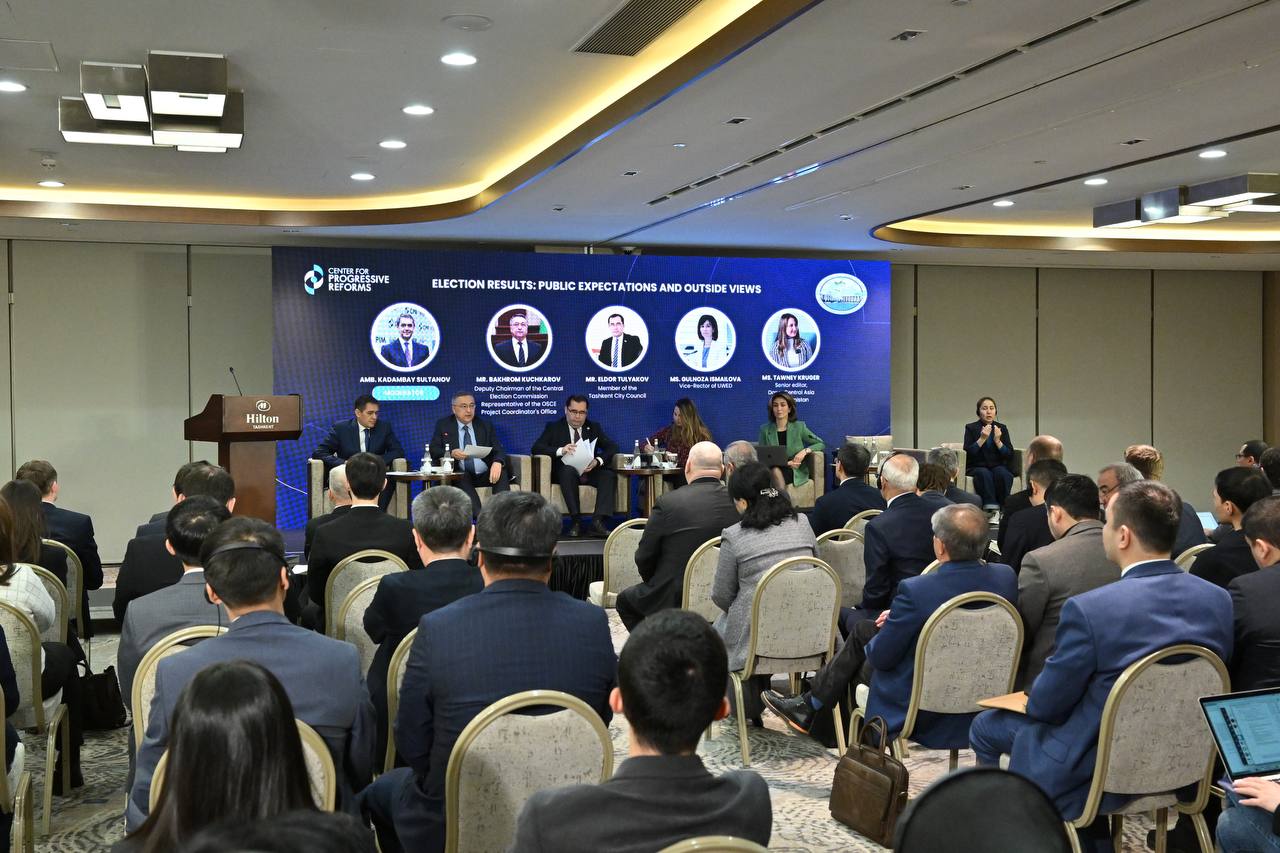
December 5, Tashkent– The Center for Progressive Reforms (CPR) hosted an
international conference to assess the results of Uzbekistan’s 2024 parliamentary
elections and discuss the role of the new parliament and civil society in advancing
reforms. The event brought together policymakers, civil society leaders, and
international experts to evaluate the level of political competition, the composition
of the newparliament, and its role in shaping the country’s future.
Uzbekistan has made significant strides in political reform since 2016, and the 2024
parliamentary elections were seen as a key indicator of this progress. However,
these elections have also raised important questions: To what extent do the election
results truly reflect the people's will? Does the new parliament represent a shift
toward more political pluralism and inclusivity? How well do the outcomes align
with the electorate’s expectations? These urgent questions need thorough
discussion, especially as Uzbekistan navigates a changing regional and global
environment.
The conference’s key takeaway was that while the 2024 parliamentary elections
represent a milestone in Uzbekistan’s democratic transition, they also reveal
challenges that must be addressed. As Mr. Mirshohid Aslanov, CEO of CPR, stated
in his opening remarks, “These election results give us an important snapshot of
where we are, but they also raise a fundamental question: Are we moving toward a
political system that fully embraces transparency, accountability, and real political
competition?”
H.E. Mr. Sodiq Safoev, First Deputy Chairman of the Senate Oliy Majlis, echoed this
sentiment in his keynote address, noting, "The focus of parliament must be on fully
covering every region of Uzbekistan, with active participation even in the most remote
villages, as well as establishing close cooperation with civil society institutions and
non-governmental organisations (NGOs). This, in turn, will help develop effective
policies that address the needs and demands of every segment of society while also
contributing to the development of civil society. Active collaboration with civil society
institutions will also create opportunities for a deeper approach to social issues and
strengthen public participation."
CPR’s sociological survey of public expectations revealed significant gaps between
what citizens expect from their elected representatives and the realities of the
election outcomes. The survey found a growing demand for greater political
diversity, alignment with social priorities, and stronger policies on critical issues like
economic inequality, social inclusiveness, and gender equality. As Mrs. Malika
Sharipova, moderator of the third Panel, pointed out, “Public confidence in our
institutions will only grow when citizens see that their voices matter—not just during
elections, but throughout the policymaking process.”
The conference continues with a strong call to action: While Uzbekistan has made
important progress in political reform, much more must be done to meet public
expectations and international standards. Experts emphasised that parliament must
evolve into a more active and independent institution, ensuring that reforms are
implemented and properly monitored and evaluated